Should You Visit the Central Kalahari or the Okavango Delta?
The Central Kalahari Game Reserve (CKGR) and the Okavango Delta are Botswana’s two most extraordinary — and most contrasting — safari destinations. The Okavango is defined by water: a unique inland delta of channels, lily pads, flood plains, and island camps accessible by mokoro and boat. The Central Kalahari is defined by its absence: an ancient fossil landscape of sand ridges, silver termite mounds, and vast riverbeds that have been dry for over 10,000 years. Both deliver world-class wildlife but in completely different ecological settings and at different price points.
Ecosystems: Water vs Desert
The Okavango Delta’s annual flooding transforms the landscape between May and September, isolating private islands accessible only by boat or light aircraft. Water-associated species — hippo, crocodile, lechwe antelope, sitatunga antelope, African fish eagle — are found nowhere in the Kalahari. The CKGR’s fossil riverbeds (Deception Valley, Passarge Valley) are ancient, bone-dry ecosystems where rain-following wildlife — black-maned lion, gemsbok, springbok, cheetah, wild dog — move with the seasonal rains. The Kalahari experience is drier, more austere, and more primeval in character.
Wildlife Comparison
Okavango Delta strengths: African wild dog (Mombo and Chitabe are Africa’s best wild dog destinations), elephant, hippo, crocodile, lechwe, sitatunga, sitatunga, and exceptional cat sightings. CKGR strengths: black-maned Kalahari lion (unique to the region), cheetah (one of Africa’s highest densities for unobstructed hunting sightings in open fossil riverbeds), brown hyena, bat-eared fox, and large antelope aggregations during the rains. The CKGR does not have elephant, rhino, hippo, or crocodile.
Visitor Density and Exclusivity
The CKGR receives fewer than 5,000 visitors per year — making it one of the least visited national parks of its size anywhere in the world. With camps hosting 8–16 guests maximum in a 52,800 km² reserve, game drive exclusivity is absolute. The Okavango Delta also maintains strict low-volume principles (maximum lodge sizes of 12–24 guests), but receives more visitors than the CKGR, particularly at the most famous camps (Mombo, Jao, Vumbura).
Cost Comparison
The CKGR is the more accessible of the two, though still at the upper end of African safari pricing. Fly-in luxury lodge camps run USD 700–1,500 per person per night. The Okavango Delta’s top island camps reach USD 1,500–3,000+ per person per night at the most exclusive properties. Self-drive camping in the CKGR is possible for experienced off-road travellers with full equipment at DWNP campsite fees of USD 15–30 per person per night — making the Kalahari the rare Botswana destination accessible at a non-luxury price point.
How to Combine Both
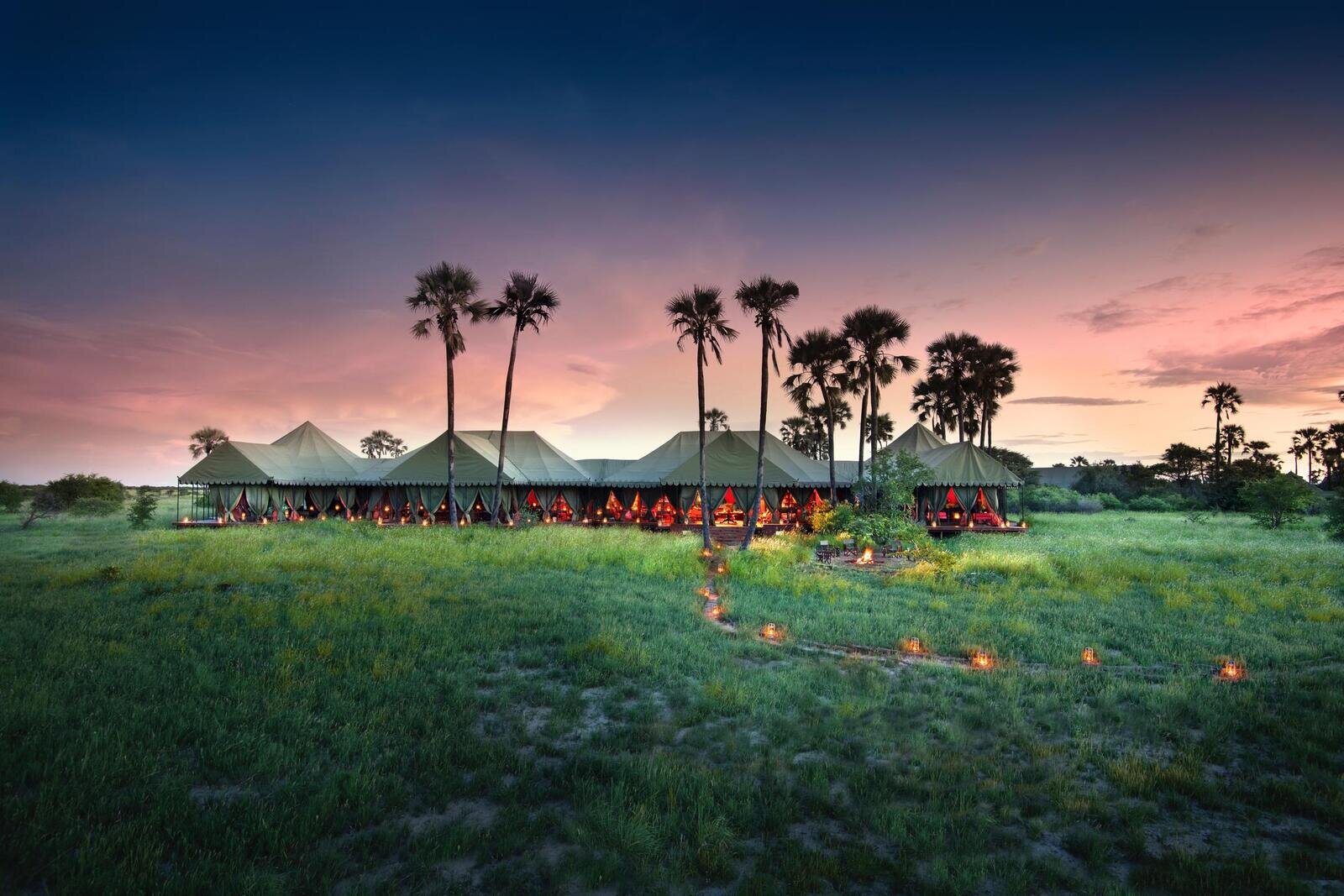
A classic Botswana circuit combines 3–4 nights in the CKGR (Kalahari Plains Camp or Tau Pan) with 3–4 nights in the Okavango Delta, connecting via Maun by light aircraft. This itinerary delivers Botswana’s complete ecological range — ancient desert to living delta — in a single 7–9 night trip and is one of the most distinctive safari circuits in Africa.
Enquire Now to design a Central Kalahari safari or a combined Botswana circuit — we arrange fly-in connections, camp bookings, and complete logistics.