


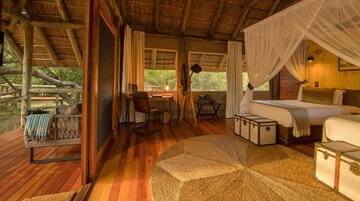
 DinakaThe Soul of the Kalahari Set within an exclusive private conservancy on the northern edge of the Central Kalahari Game Reserve, Dinaka offers a truly…FromR10,256pp / night sharingView
The reserve
Central Kalahari Game Reserve
At the heart of Botswana lies the vast and untamed Central Kalahari Game Reserve — so immense that most of the country’s other parks could fit within its borders and…
Overview
Why go
At the heart of Botswana lies the vast and untamed Central Kalahari Game Reserve — so immense that most of the country’s other parks could fit within its borders and still leave wilderness untouched. This is a truly magical Kalahari destination: a landscape of remote tracks, golden grasslands, ancient fossil river valleys, and endless salt pans, alive with exceptional wildlife encounters. There is nothing quite like sleeping beneath the stars of the Kalahari Desert, or witnessing a black-maned lion stride through the legendary Deception Valley at sunrise — a moment that captures the raw, timeless spirit of the Kalahari.
This reserve sits deep within the Kalahari Desert in Botswana, offering vast open landscapes, endless skies, and a feeling of complete isolation you can’t find in busier parks.Expect hardy, specially adapted species like black-maned Kalahari lions, oryx, brown hyena, bat-eared foxes, and huge herds of springbok. Predator sightings can be exceptional because visibility is so good across the open pans.Unlike more famous safari regions, sightings are often private — sometimes it’s just you and the wildlife.
Wildlife
Across the vast grasslands of the pans, valleys and low hills, desert-adapted antelope like springbok and oryx graze in quiet resilience. Predators occasionally patrol the open plains, with the striking black-maned Kalahari lions standing out as a true highlight, while cheetah flourish in this wide, open terrain. Fortunate visitors may also encounter sociable family groups of bat-eared foxes, the fearless honey badger, or the elusive brown hyena, most often seen after dark.
Scenery
As with all desert environments, in the harsh glare of midday, the Kalahari can appear like an overexposed photograph. But it’s the magical light — turning the landscape molten gold in the first hours after sunrise and again before sunset — that truly captures the soul of this wilderness. Expansive grass-filled valleys, shimmering salt pans, and low sandhills cloaked in hardy desert vegetation define this vast, ever-changing landscape.
Best Time to Visit
For prime wildlife viewing and fewer crowds, plan your visit during the wet season, from December to March. As the rains return, wildlife congregates around the pans in Deception Valley and surrounding areas, creating exceptional game-viewing opportunities. Travellers can also benefit from low-season lodge rates. The main trade-off is that some roads may become muddy and harder to navigate.
Weather & Climate
The desert climate of the Central Kalahari is at its most testing in the Dry season (April to October), with average daytime temperatures peaking at 34°C/93°F. The exception is early in the morning when you’ll need to rug up against the chill if you’re doing a game drive. The Wet season (November to March) cools things down with its occasional showers.
At a glance
CountryBotswana
RegionCentral Botswana
SizeAbout 52,800 km²
MalariaLow-risk area; prophylaxis advised
SignatureBlack-maned lions and Deception Valley
Camps7 contracted camps
Best monthsDecember to April
Winter days11–24 °C (52–75 °F) in July
Nearest airportMaun (MUB), about 1 hour by air
Wildlife & animals
What you are likely to see
For a largely desert environment, Central Kalahari Game Reserve has surprisingly good wildlife viewing. All three of the big cats are spotted on a reasonably regular basis, including the notoriously black-maned Kalahari lion. Wildebeest, gemsbok and springbok can be seen year-round, but especially at the water-filled pans in Deception Valley after the rains. Steenbok, giraffe and greater kudu can be found in smaller numbers.
Giraffe
OccasionalZebra
CommonWildebeest
CommonLion
OccasionalLeopard
OccasionalCheetah
OccasionalHyena
OccasionalWild Dog
CommonBest time to visit
Month by month
The best time to visit Central Kalahari Game Reserve is during the wet months, from December to March, when animals gather in the Deception Valley area. However, roads can get very muddy at this time. In the drier months, from April to October, the roads tend to be in better condition. This is especially true later in the season when animals gather close to water sources, such as the waterholes at Letiahau, Passarge Valley, Sunday Pan and Xaxa. December to March (Best wildlife viewing in Deception Valley) July to October (It rarely gets crowded, but high-season rates may apply in lodges) 52,800km² / 20,386mi² 941-1,132m / 3,087-3,714ft December to March Best wildlife viewing in Deception ValleY July to October It rarely gets crowded, but high-season rates may apply in lodges November to June Low-season rates may apply May to August Less hot during the day with dry conditions January It is hot and it can be rainy
Jan
Peak
Feb
Peak
Mar
Peak
Apr
Peak
May
Good
Jun
Good
Jul
Good
Aug
Good
Sep
Green
Oct
Green
Nov
Good
Dec
Peak
PeakGoodGreen season
December to March
Best wildlife viewing in Deception ValleY
July to October
It rarely gets crowded, but high-season rates may apply in lodges
November to June
Low-season rates may apply
May to August
Less hot during the day with dry conditions
January
It is hot and it can be rainy
Weather & climate
Climate chart
Central Kalahari Game Reserve has a hot desert climate with a distinct Dry season (April to October) and Wet season (November to March). It is recommended to bring warm clothing for early morning game drives in the Dry season, especially from May or June to August.
| Month | Jan | Feb | Mar | Apr | May | Jun | Jul | Aug | Sep | Oct | Nov | Dec |
|---|---|---|---|---|---|---|---|---|---|---|---|---|
| Min °C | 17 | 16 | 15 | 13 | 6 | 8 | 11 | 15 | 15 | 19 | 19 | 19 |
| Min °F | 63 | 61 | 59 | 55 | 43 | 46 | 52 | 59 | 59 | 66 | 66 | 66 |
| Max °C | 36 | 36 | 35 | 32 | 29 | 26 | 24 | 27 | 31 | 34 | 35 | 35 |
| Max °F | 97 | 97 | 95 | 90 | 84 | 79 | 75 | 81 | 88 | 93 | 95 | 95 |
Getting there
Reaching the Central Kalahari
The Central Kalahari Game Reserve lies about 250km (155mi) south of Maun, the main gateway to the Okavango Delta, with the drive taking roughly five hours (road conditions permitting). The reserve has five entrance gates, including Kang Gate, opened in 2024 in the far southwest. This new access point allows travellers to enter directly from the town of Kang, avoiding the need to route through Khutse Game Reserve. Most visitors reach the reserve by renting a 4x4 vehicle, while others choose fully guided 4WD safaris with driver-guides. Self-drive travellers most commonly enter via Matswere Gate, located about 40km (25mi) northeast of Deception Valley and 45km (28mi) west of Rakops. After rainfall, access roads can deteriorate, significantly increasing travel times. Flying is often the easiest option. Visitors typically arrive via Maun International Airport or Kasane International Airport, then continue by charter aircraft to camps within or around the reserve. Charter flights between parks are usually arranged by tour operators, as there are no scheduled commercial flights into the Central Kalahari itself. Driving times are approximate and can be affected by weather and road conditions, so always allow extra travel time.
By air
Gateway: Maun Airport (MUB)
Charter to camp: About 1 hour by light aircraft
Scheduled flights: None into the reserve; charters only
Booked by: Your specialist, with the stay
By road
From Maun: A full day by 4x4 on sand tracks
Inside the reserve: Camp vehicles only; distances are vast
Fuel and supplies: None inside the reserve
Good to know
Combines well with: Okavango Delta · Makgadikgadi · Chobe
Malaria: Low-risk area; prophylaxis advised
Minimum stay: Three nights advised
Accommodation
7 camps
7 camps match
DinakaThe Soul of the Kalahari Set within an exclusive private conservancy on the northern edge of the Central Kalahari Game Reserve, Dinaka offers a truly…FromR10,256pp / night sharingView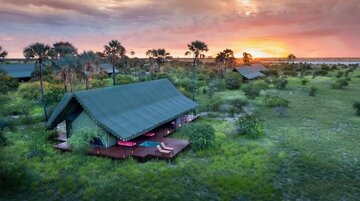 Jacks CampJack’s Camp is one of Africa’s most iconic and storied safari camps, set deep within a vast one-million-acre private wildlife reserve in the heart of…FromR36,541pp / night sharingView
 Tau PanIn the heart of the legendary Central Kalahari Game Reserve — one of the largest untouched wilderness areas on Earth — Tau Pan Camp rises…FromR15,698pp / night sharingView
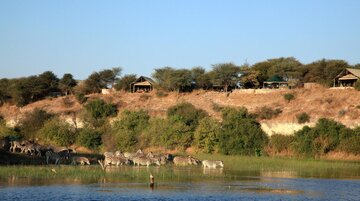 Meno a Kwena Tented CampMeno a Kwena isn’t about over-the-top luxury — it’s about memorable atmosphere. Perched 100 feet above the Boteti River, this intimate camp of just…FromR22,238pp / night sharingView
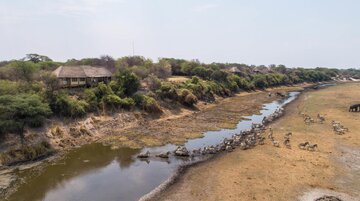 Leroo la TauPerched dramatically above the Boteti River , where it forms the western boundary of Makgadikgadi Pans National Park , Leroo La Tau enjoys one of…FromR22,500pp / night sharingView
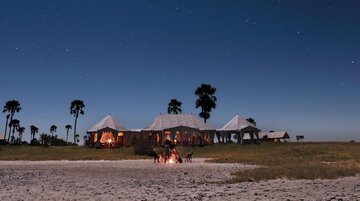 San CampSet in the heart of Botswana’s shimmering Makgadikgadi Salt Pans, San Camp is a place of rare beauty, romance, and boundless horizons. Elegant white…FromR45,262pp / night sharingView
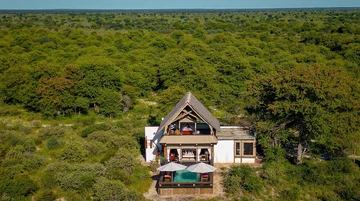 Feline Fields LodgeRates on enquiryView
Nothing here matches all three answers
Widen one answer, or see every camp across the reserve on the full collection page.
Browse all 7 camps
Let us help plan your next vacation
Tell us the shape of the trip
Your dates, who is travelling, and roughly what you want the days to feel like. We come back with two or three camps worth your time, priced, with the reasoning — within 15 minutes in working hours.